
In the 1960s sitcom, Get Smart, Agent 99 and Maxwell Smart are a spy duo working for CONTROL. Across five seasons, we never learn Agent 99’s name. Sixty years later, agentic AI has the potential to utterly transform how work gets done and society functions. One asks, how can AI scale sustainably without a massive rethink around digital identity? AI agents are already trading tokens, managing treasuries, deploying capital, optimising yield and executing strategies. If AI can autonomously move data and value across the internet, agentic agent identity (KYA or know-your-agent) will quickly become the litmus test. Indeed, at a recent conference Nicolas Kokkalis, founder of Raspberry PI talked about one of the most urgent challenges in the AI era: how to maintain trust and verify real human identity as AI systems become capable of generating convincing bots, profiles and interactions at scale.
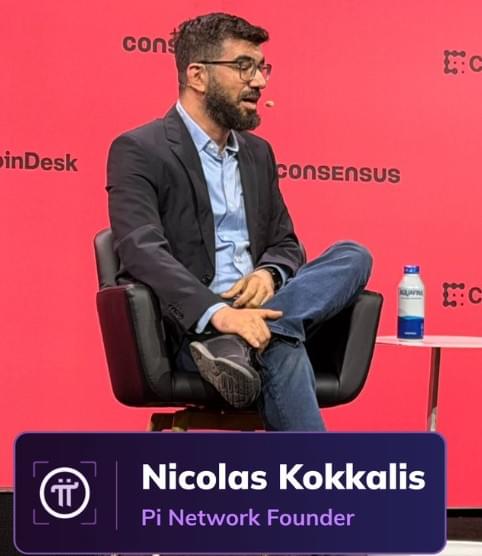
Source: X
Real-time systems
Real-time systems of intelligence converge across instant data streams, autonomous AI generated agents and tokenisation. As we transition from batch to real-time and from human to machine, then envision existential risks to the internet as we know it. Automation and orchestration without effective guardrails or strict governance is a recipe for disaster; with many more bots than humans processing data online, then an urgency for decentralised, user-controlled identity wallets increases from all corners. From data munching big techs to big government surveillance, there is an ever growing trust gap. Global angst amongst the next generation rises as AI embeds into workflows, decisioning and results. The opportunity for global banks is now. There are potentially two primary contenders for the custodial benefits of issuing identity wallets online and at scale: they are JPMorgan Chase and Revolut - both have global ambition, top talent and long-term vision. Let us square, therefore, the circle between privacy and security.
Payments (analogue to digital)
From card-based electronic payments of the ‘get smart’ era to today’s smart contracts, identity access and governance has become patchwork at best and reactive at worst. The levels of fraud and scams continue to rise exponentially; networked individuals and state actors penetrate weak defences and poorly designed architectures; financial regulators supervise reactively from antiquated advice and manual guidebooks. Visa Direct and Mastercard Move are swiftly becoming instant data exchange networks and platforms - leveraging global trust and brand, they aim to become default ecosystems for the internet of value. However, these two behemoths have little ambition in becoming identity issuers or wallet custodians.
Financial fraud and scams
Nasdaq Verafin just released its annual Global Financial Crime Report: illicit financial activity is now at a staggering $4.4 trillion; fraud and scams account for over $500 billion causing material losses for the victim and further erosion of institutional trust; and, criminal organisations and state actors move illicit funds across borders, jurisdictions and sectors in just seconds. Meanwhile, regulated institutions remain buried in technical debt and blinkered by siloed culture. Ultimately, which regulated banks are poised to capture both the commercial and societal benefits from issuing identity credentials via digital wallets for cross-border value exchange? Possibly, Revolut and JP Morgan Chase lead the pack - both have global ambition, top technology and financial platform thinking.
Fintech evolution
One must admire the speed of change since 2008. The smart phone has become the operating system for cross-border value exchange. Chinese leaders launched WeChat and AliPay via QR code, bypassing card networks and opening up vast fintech potential. Bitcoin and other derived blockchain protocols enable P2P stablecoins linked to base fiat currencies - hence all these leap-frogging innovations and digital identity becomes ever more patchwork and fragmented.
Digital identity
At sovereign level Europe, Australia and India are leveraging digital identity systems for both accessibility and inclusion to support citizen services online:
- European Digital Identity Framework (eIDAS 2.0) - Europe is building digital identity wallets allowing citizens to prove identity and credentials across borders.
- Australian Trusted Digital Identity Framework (TDIF) - a framework of rules and standards enabling secure, trusted and consistent digital identity verification, so forming the foundation of national Digital ID legislation.
- Indian Unique Identification Authority of India (UIDAI) - India’s digital identity platform now supports over a billion citizens and underpins financial inclusion, payments and digital public services.
Technology vendors, including Okta to Ping, deliver identity access and governance to protect stakeholders, customers and employees from hackers and scammers; operating systems from closed Apple iOS to open Google Android continuously monitor their ecosystems of applications to maintain data safely and securely. Moreover, banks use a patchwork of federated systems, third party support and proprietary databases to reduce fraud and protect their customers; SWIFT moves government fiat, and stablecoin platforms move digital assets. We picture a lack of interoperability between networks, systems and applications - the internet was never designed with an identity layer, but here we are. What would Agent 99 do?
Apps and infrastructure converging
Fintechs have taught legacy banks how to better serve their customers via better front end experiences. From cash to stablecoins and from batch to instant, digital rails collapse monolithic IT architectures replacing static core systems of record; agentic AI enables autonomous workflows horizontally across departments, borders and even jurisdictions; modern and scalable IT systems are continuously executing, highly automating and tightly interconnecting; table stakes are graph matrices and algorithms of BigTechs such as Facebook aka Meta; cloud technologies combine with data-intensive AI for instant decisioning without human inputs. Hence, we need far more data governance and codebase maintenance as data lineage and leakage get worse and the financial services industry needs KYA or know-your-agent tooling immediately to identify these machines and bots transferring money online on behalf of humans and entities. As the dream of Web3 and decentralised finance nears, identity wallets issued by trusted and regulated banks should help us all cross the divide resulting in a safer online world, including:
- systems that are transparent and verifiable
- networks that are global from day one
- economic models that align users, creators, developers and operators.
Infrastructure that does not depend on a small number of intermediaries
This half of this decade will shape the internet’s future for generations to come, so let’s help the banks issue identity and restore institutional trust for all. For decades banks protected money, governments protected identity and technology firms-controlled access to information. Yet agentic AI may collapse these boundaries into a single problem. An autonomous machine trading assets, initiating payments, signing contracts and interacting with governments cannot simply rely on usernames and passwords designed for humans. The internet was built around connectivity, not trust. And that design decision mattered little when people moved information; it becomes far more consequential when machines begin moving money, assets and legal rights. The institutions that issue and verify trusted digital identity may not simply control authentication. They may ultimately determine who can participate in the economy itself. So, the question is no longer whether AI needs an identity layer - the question may be whether future citizens, companies and AI agents require permission from whoever owns it.
This article first appeared in Digital Bytes (9th of June, 2026), a weekly newsletter by Jonny Fry of Team Blockchain.